How to Choose LED Lighting for Sustainable Living

Time:2026-10-11 Author:Isabella
0%

Choosing LED lighting for sustainable living involves more than replacing every old bulb. It requires attention to energy use, light quality, product lifespan, and household habits. A practical home assessment often starts with rooms that stay lit longest, such as kitchens, hallways, and home offices. Replacing a 60-watt incandescent bulb with an efficient LED can reduce electricity demand while maintaining similar brightness. Look for lumens, not watts, because lumens measure visible light more accurately. Small choices matter.

Why is LED lighting a better choice for sustainable living? LEDs generally use less electricity and last much longer than incandescent lamps. Their lower energy demand can reduce operational emissions, especially where electricity comes from fossil fuels. However, sustainability is not automatic. Manufacturing, packaging, transport, and disposal still create environmental impacts. A cheap bulb that fails quickly may be less responsible than a durable, well-tested product. This point is easy to overlook.

Reliable selection also requires checking color temperature, color rendering, dimming compatibility, and warranty details. Warm white light around 2700K can suit bedrooms and living rooms, while cooler light may support focused work. A high color-rendering index can make food, fabrics, and skin tones appear more natural. Independent certifications and clear manufacturer specifications offer stronger evidence than vague eco-labels. Yet even expert guidance has limits. Household behavior changes results. Leaving efficient lights on all night still wastes energy. Recycle failed LEDs through approved local programs when available, and choose replaceable fixtures where practical. Sustainable lighting is not a perfect purchase; it is a series of measured, revisable decisions.
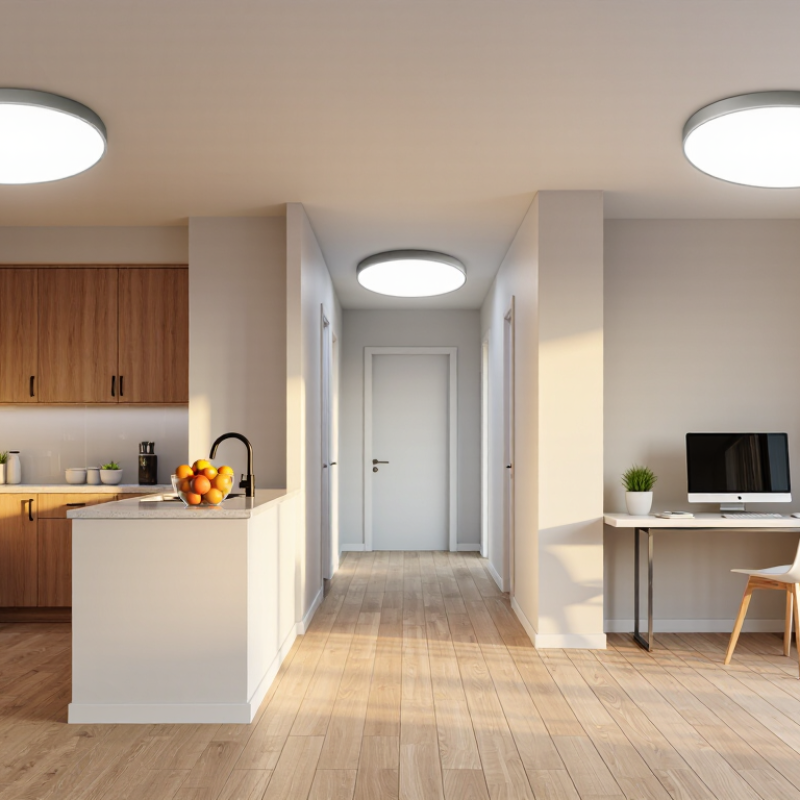
How to Choose LED Lighting for Sustainable Living

Understanding LED Lighting and Its Sustainability Benefits

Choosing LED lighting starts with understanding how it uses energy, not simply choosing the brightest bulb. An LED converts more electricity into visible light than an incandescent lamp. This can reduce household lighting energy by roughly 75 to 90 percent. It also produces less wasted heat. Small change, real impact. Look for lumens, not watts, when comparing brightness. An 800-lumen lamp usually suits a modest reading area.

Sustainability also depends on lifespan and daily use. A well-made LED can last many times longer than older bulbs, reducing replacements and packaging waste. In practical use, I check dimmer compatibility, color temperature, and ventilation before installation. Warm white light often feels comfortable in bedrooms and living rooms. Cooler light may support detailed tasks in kitchens or workspaces. Avoid over-lighting. Motion sensors and timers can prevent empty rooms from staying bright. Yet efficiency claims are not always the whole story. Poor thermal design, flickering, or early failure can weaken the environmental benefit.

Reliable selection means reading verified energy data and keeping purchase records. Choose appropriate brightness, expected operating hours, and a replaceable fitting when possible. At disposal, follow local rules because some LED products contain electronic components. I still question whether every replacement is necessary. Repairing a fitting or lowering brightness may save more resources than upgrading immediately. That judgment takes attention. A simple energy meter can compare actual consumption before and after installation. This makes sustainability measurable inside an ordinary home.

Assessing Your Space, Lighting Needs, and Energy Goals

Choosing LED lighting starts with your space, not the package. I measure ceiling height, window direction, wall color, and task locations. A dark kitchen countertop needs more focused light than a pale bedroom wall. The U.S. Department of Energy reports that LEDs use at least 75% less energy and last up to 25 times longer than incandescent lamps. Still, efficiency is not the whole decision. Check lumens, not watts, because lumens describe visible output. For a desk, I prefer adjustable, low-glare light. For a hallway, modest, even illumination is usually enough. Too much brightness wastes electricity and can make a small room feel harsh.

Your energy goal should be measurable. Record each lamp’s wattage, daily operating hours, and electricity price. Estimate consumption by multiplying kilowatts by operating hours and tariff. The International Energy Agency’s 2022 lighting analysis states that lighting represents about 15% of global electricity consumption. Household results vary. My first estimates were optimistic because I ignored standby controls and decorative fixtures. That mistake changed the plan. Choose LEDs with suitable color temperature, strong color rendering, and dimming compatibility. The Department of Energy recommends checking product information and controls before installation. In rented spaces, test one fitting first. Flicker, glare, and awkward shadows are easy to miss online. Keep an energy log for two weeks. The brightest lamp may rarely be needed.

Comparing LED Efficiency, Lifespan, Color, and Brightness

Choosing LED lighting for sustainable living starts with efficiency, but watts alone can mislead. Check lumens, which measure visible light, and compare them with energy use. An 800-lumen LED may replace an older 60-watt bulb while using about 8–10 watts. Small numbers matter. A quality LED rated for 15,000–25,000 hours needs fewer replacements, especially in high ceilings or busy hallways. Ratings are estimates, not promises.

For color, choose kelvins carefully: 2700K feels warm in bedrooms, while 4000K appears clearer in kitchens or work areas. Color rendering index, or CRI, helps reveal natural tones. A CRI of 80 or higher suits most homes, while artwork may need more.

Brightness depends on room size, shade, wall color, and personal comfort. I once used a bright, cool lamp above a dining table, and the room felt more like an office. That choice was efficient, but not pleasant.

Before buying, inspect the package for lumen output, color temperature, CRI, rated life, and estimated annual energy use. Avoid choosing the highest brightness by default.

Layered lighting often works better: soft ambient light, focused task light, and low-level evening light. Dimmable models can reduce glare and energy use, but only when the lamp and dimmer are compatible.

I still replace LEDs earlier than expected when heat builds inside enclosed fixtures. That limitation deserves more attention.

Selecting Safe, Durable, and Environmentally Responsible Products

Choosing LED lighting for sustainable living means looking beyond brightness and price. Safety, durability, and environmental responsibility should guide every purchase. The U.S. Department of Energy reports that LED lamps use at least 75% less energy and can last up to 25 times longer than incandescent lamps. That difference matters in a hallway light used every night. Still, efficiency alone does not guarantee a responsible product.

Check for recognized electrical safety certification and clear installation instructions. Look for suitable voltage ratings, enclosed fixtures, and protection against overheating. For comfort, compare color temperature, color-rendering performance, and flicker information. A warm 2700K lamp may feel calmer in a bedroom, while higher output suits a work area. Durability claims need evidence. Review the rated life, lumen-maintenance value, heat-sink design, and warranty terms. The word “long-lasting” is not enough.

Choose the right brightness, not the highest brightness. Over-lighting wastes energy and can disturb sleep. The International Energy Agency identifies lighting as responsible for roughly 15% of global electricity consumption, so small household choices can accumulate. LEDs contain no mercury, unlike fluorescent lamps, but their electronic components still create waste. Select replaceable or repairable designs when possible, reduce unnecessary packaging, and check local recycling guidance. I admit that product labels remain confusing, even for careful buyers. Better standards and clearer reporting are still needed.

How to Choose LED Lighting for Sustainable Living - Selecting Safe, Durable, and Environmentally Responsible Products

Comparison of important LED lighting selection criteria for sustainable living
Selection Criterion Recommended Target Why It Matters What to Check on the Product Label Practical Sustainable Choice
Energy efficiency At least 90 lumens per watt (lm/W) Higher efficacy produces more light with less electricity, reducing operating costs and use-phase emissions. Compare lumens and watts, then calculate efficacy as lumens ÷ watts. Use the rated lumens of the complete lamp or fixture. Choose the highest-efficacy product that provides the required brightness, beam angle, and light quality.
Brightness Use lumens rather than watts; common household ranges are approximately 450–800 lumens for a general-purpose lamp and 1,100–1,600 lumens for a brighter room lamp. Lumens measure light output. Wattage measures electricity consumption and is not a reliable indicator of brightness for LED products. Look for “lumens” or “lm” on the package and compare products with similar light distribution. Select only the light output needed for the task to avoid unnecessary energy use and glare.
Color temperature 2,700–3,000 K for warm residential areas; 3,500–4,000 K for kitchens, offices, and work areas. Color temperature affects visual comfort, atmosphere, and suitability for different activities. Check the Kelvin value (K). Lower values look warmer and more yellow; higher values look cooler and bluer. Use warm light in bedrooms and living rooms, and reserve cooler light for focused work where appropriate.
Color rendering CRI or Ra of 80 or higher; 90 or higher where accurate color appearance is important. A higher color-rendering index generally makes colors appear more naturally under the light. Look for “CRI,” “Ra,” or “color rendering index.” For retail, art, kitchens, and studios, check the specific R9 performance when provided. Choose CRI 90+ for areas where food, clothing, artwork, or skin tones must look natural.
Rated lifetime At least 25,000 hours for household lamps; 50,000 hours can be suitable for commercial or hard-to-reach fixtures. Longer life reduces replacement frequency, material use, maintenance, and waste. Check rated life in hours and whether it is based on an established test method. Also review the warranty period. Prioritize products with a credible lifetime rating and a warranty that supports the claimed durability.
Light maintenance Prefer products retaining at least 70% of initial light output at the end of their rated life, commonly shown as L70. LEDs often continue operating after becoming noticeably dimmer. L70 describes when light output is expected to reach 70% of its initial level. Look for L70, lumen maintenance, or a similar performance statement. For high-use or difficult-to-access locations, choose a fixture with strong lumen maintenance and replaceable components where available.
Flicker and visual comfort Low-flicker or flicker-free performance, especially in workspaces, schools, and areas used for cameras. Rapid light fluctuation can cause discomfort for some people and may create visible stroboscopic effects with moving objects. Check manufacturer flicker data such as percent flicker and flicker index, or seek products tested to recognized lighting-performance requirements. Choose a well-tested lamp and verify compatibility with dimmers, sensors, and cameras before installation.
Electrical performance Power factor of at least 0.90 for larger commercial installations; residential requirements may differ by local rules. A higher power factor uses the electrical supply more effectively and can reduce unwanted current demand in larger systems. Review power factor, input voltage, frequency, and driver information on the technical specification sheet. For commercial projects, specify efficient drivers with suitable power factor and low total harmonic distortion where required.
Dimming and controls Use dimmable products only with compatible dimmers; consider occupancy or daylight controls for frequently used spaces. Controls can reduce operating hours and energy consumption, but incompatibility may cause flicker, noise, or premature failure. Check the permitted dimmer type, minimum load, control protocol, and whether the lamp is designed for the intended system. Install controls where they will genuinely reduce use, and confirm compatibility before purchasing in quantity.
Safety and thermal design Use products with recognized electrical safety testing and adequate heat dissipation. Excess heat can shorten LED and driver life. Proper electrical protection reduces the risk of shock, overheating, and fire. Look for applicable safety marks, installation instructions, operating-temperature limits, and enclosed-fixture suitability. Do not place a lamp in a fully enclosed fixture unless the product is specifically rated for that application.
Moisture protection Choose an IP rating appropriate to the location: for example, IP44 for splashing water and higher ratings for exposed outdoor conditions when required. Ingress protection helps prevent water or dust from reaching electrical parts, improving safety and service life. Check the two-digit IP code and verify whether the rating applies to the complete installed fixture. Use bathroom, exterior, and landscape products specifically rated for their actual exposure conditions.
Hazardous substances Select mercury-free LED products and comply with applicable restricted-substance requirements. Unlike fluorescent lamps, LEDs generally do not require mercury for operation. Avoiding hazardous substances simplifies handling and end-of-life management. Review the product’s environmental or material declaration and local compliance information. Do not dispose of LED lamps with general household waste where local recycling programs accept electrical products.
Repairability and replaceable parts Prefer fixtures with replaceable LED modules, drivers, or standard components when practical. A failed driver or control component does not necessarily mean the entire fixture must become waste. Check whether the LED module and driver are replaceable and whether spare parts or service instructions are available. For permanent installations, choose serviceable designs rather than sealed units when comparable performance is available.
Packaging and materials Favor minimal, recyclable packaging and durable housing materials designed for long service. Packaging and material choices contribute to the product’s overall environmental footprint, although operating energy usually dominates for long-used lighting. Look for packaging material information, recycled content claims, and clear disposal instructions. Avoid unnecessary plastic packaging and prefer products with transparent, verifiable environmental claims.
End-of-life recycling Use a documented collection or recycling route for lamps and electrical fixtures. LED products contain electronic components, metals, plastics, and sometimes other materials that may be recovered or require controlled handling. Check local rules and recycling symbols; availability varies by country and municipality. Keep failed lamps separate from general waste until the appropriate local collection option is confirmed.
Environmental certifications Prefer independently verified energy, safety, and environmental claims where relevant to the project. Third-party verification can make it easier to compare performance and reduce reliance on vague green marketing. Review the certification scope, test standard, issuing organization, and product model number rather than relying on general claims. Use recognized, current documentation that applies to the exact product, not merely to a product family or manufacturer.

Note: Performance targets are general guidance. Always verify local electrical regulations, installation requirements, product specifications, and available recycling services before purchase or installation.

Installing, Using, and Maintaining LEDs for Long-Term Sustainability

Choosing LED lighting for sustainable living starts with the room, not the packaging. In home energy audits, I have found that incorrect brightness often leads to wasted electricity. Select warm light for bedrooms and living areas. Use brighter, cooler light for workspaces. Check the fitting, voltage, and dimmer compatibility before installation. Turn off the circuit at the breaker, and ask a qualified electrician for hardwired fixtures. A loose connection can create heat and shorten the lamp’s life.

Use LEDs only where their strengths matter. Motion sensors can reduce waste in hallways, bathrooms, and storage rooms. During daylight, open curtains before switching on lights. Avoid leaving decorative lighting on overnight. I once installed bulbs that were too bright for a small kitchen, then replaced them later. That mistake cost money and created unnecessary waste. Sustainability requires adjustment, not perfection.

Tips: Clean dusty bulbs gently with a dry cloth. Keep vents clear around enclosed fixtures. Do not exceed the fitting’s stated temperature rating. Replace flickering lamps promptly, but inspect the socket before blaming the bulb. Recycle old lighting through approved local collection services. Track your electricity use for one month after installation. The results may challenge your assumptions.

FAQS

How much energy can LED lighting save?

LEDs may reduce household lighting energy by roughly 75 to 90 percent. They convert more electricity into visible light. Less energy becomes wasted heat.

Should I compare bulbs by watts or lumens?

Compare lumens for brightness. An 800-lumen lamp usually suits a modest reading area. Watts describe energy use, not visible brightness.

Which light color works best in different rooms?

Warm white light often feels comfortable in bedrooms and living rooms. Cooler light can support detailed kitchen or workspace tasks. Personal preference still matters.

How can I avoid wasting light at home?

Match brightness to the room instead of choosing the brightest lamp. Open curtains during daylight. Timers and motion sensors help in hallways, bathrooms, and storage rooms.

What should I check before installing an LED lamp?

Check the fitting, voltage, dimmer compatibility, and temperature rating. Keep ventilation openings clear. Turn off the circuit at the breaker before installation.

What causes flickering or early LED failure?

Flickering may come from the lamp, socket, dimmer, or loose connection. Poor thermal design can shorten its life. Inspect the socket before blaming the lamp.

How should I maintain LED lighting?

Clean dusty bulbs gently with a dry cloth. Do not cover vents around enclosed fixtures. Replace flickering lamps promptly, but investigate the cause first.

How can I measure whether new lighting saves energy?

Record electricity use for one month after installation. A simple energy meter can compare usage before and after changes. The result may challenge your assumptions.

Should I replace every older lamp immediately?

Not always. Repairing a fitting or lowering brightness may save more resources. I once chose bulbs that were too bright and created avoidable waste.

Conclusion

LED lighting is a practical foundation for sustainable living because it uses less electricity, produces less heat, and generally lasts much longer than traditional bulbs. Why is LED lighting a better choice for sustainable living? Its energy efficiency can reduce household power consumption and related emissions, while its extended lifespan helps limit the number of discarded bulbs. To choose the right option, consider the size and purpose of each room, available fixtures, daily usage, and personal energy goals. Compare products by efficiency, expected lifespan, brightness, and color temperature so the lighting suits both your activities and comfort.

Sustainable selection also means looking for safe, durable products made with responsible materials and appropriate certifications. Correct installation improves performance and reduces safety risks, while thoughtful use—such as switching lights off when they are unnecessary—saves additional energy. Regular cleaning, checking connections, and replacing damaged components can help LEDs work efficiently for longer. With informed choices and simple maintenance, LED lighting can support comfortable spaces, lower operating costs, and a more environmentally responsible lifestyle.

Isabella

Isabella

Isabella is a dedicated marketing professional with a sharp focus on driving brand growth and engagement through strategic content creation. With an extensive background in digital marketing, she combines her passion for storytelling with her keen understanding of industry trends to deliver......